
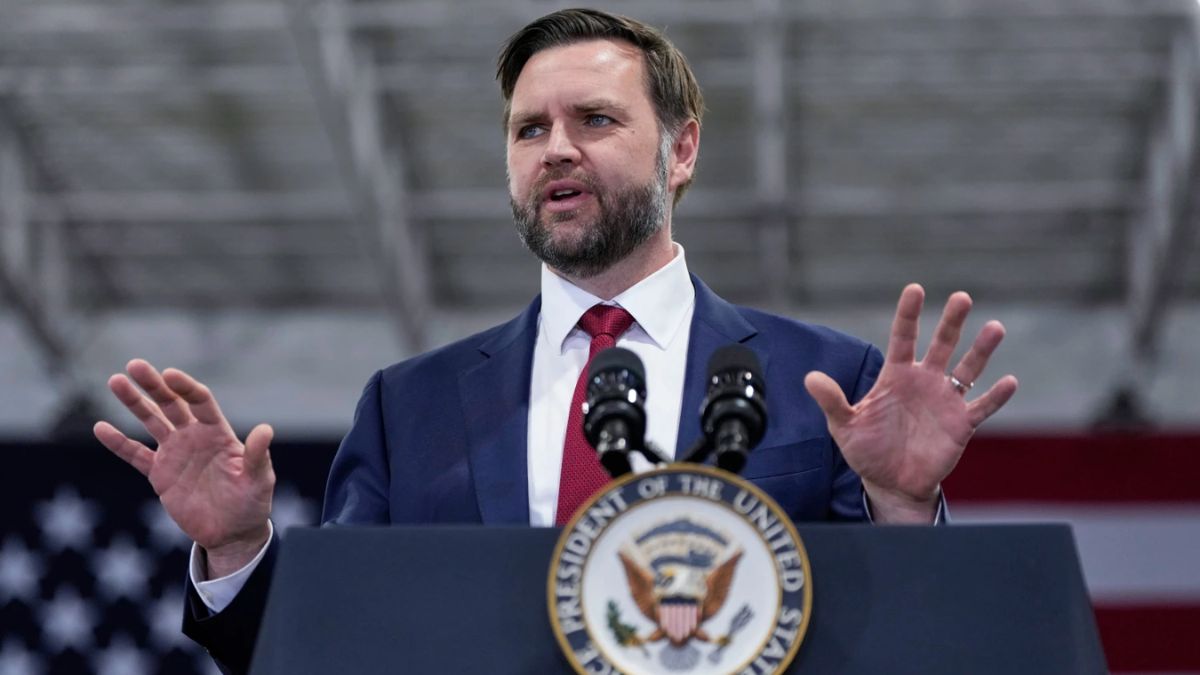
Vice President JD Vance announced Wednesday that the Trump administration is withholding $1.3 billion in Medicaid reimbursements to California, citing concerns over possible fraud and questionable billing practices within the state’s program.
Vance also warned that the administration may take similar action against other states if they fail to aggressively investigate and prosecute Medicaid fraud. The announcement marks another major step in the administration’s broader campaign to tighten oversight of federal healthcare spending.
California Targeted Over Alleged Medicaid Fraud Issues
Speaking at the White House in his role as the administration’s fraud czar, Vance said California is being singled out because federal officials believe the state has not taken fraud prevention seriously enough.
According to Vance, taxpayers are being harmed when Medicaid funds are misused, and he argued that fraud can also have serious medical consequences for patients.
He claimed that some individuals have received medications they may not have needed because fraudsters allegedly pushed false prescriptions and improper drug administration.
Vance said these concerns show why the federal government believes stronger action is necessary to protect both patients and public funds.
Similar Action Was Previously Taken Against Minnesota
The decision involving California follows a comparable move earlier this year. In February, the Trump administration suspended Medicaid payments to Minnesota amid separate concerns over program fraud.
The California payment hold suggests that the administration is willing to use funding suspensions as a broader enforcement tool in states where it believes fraud investigations are insufficient.
All 50 States Warned Over Medicaid Fraud Enforcement
Vance said the federal government is also notifying all 50 states that funding for their Medicaid Fraud Control Units could be frozen if they do not pursue fraud cases more forcefully.
These units operate in every state and are responsible for investigating and prosecuting fraud committed by Medicaid providers.
Vance warned that federal support for those anti-fraud offices could be cut off if they are not doing enough.
He added that if federal officials continue identifying serious problems, the administration could also restrict other funding streams connected to state Medicaid programs.
Vance Says Some States Are Not Taking Fraud Seriously
The vice president said both Republican-led and Democratic-led states have shown a willingness to confront Medicaid fraud. However, he argued that some states, which he described as “mostly blue states,” have not treated the issue with enough urgency.
Vance framed the administration’s actions as part of a larger effort to safeguard federal healthcare programs, saying that protecting programs such as Medicare requires states to prevent their systems from being exploited.
He encouraged states including California, New York, Maryland, and Ohio to cooperate with federal officials and use better technology and enforcement tools to identify and eliminate fraudulent activity.
CMS Flags $1.3 Billion in California Medicaid Claims
Dr. Mehmet Oz, administrator of the Centers for Medicare and Medicaid Services (CMS), said California’s Medicaid records raised “major red flags” for federal investigators.
According to Oz, CMS wants California to explain several categories of billing, including:
- $630 million in Medicaid billing that requires clarification
- $500 million tied to home health services
- $200 million in spending the administration described as questionable and connected to coverage involving undocumented immigrants
Oz emphasized that undocumented immigrants are not eligible for federal Medicaid benefits, although California separately uses state funds to provide certain healthcare coverage to some undocumented residents.
He described the $1.3 billion payment hold as the largest deferral ever issued by CMS and said the federal government wants California to explain how those unusually large or irregular payments were generated.
California Officials Push Back Against the Administration
Democratic leaders in California strongly criticized the announcement.
Gov. Gavin Newsom’s office responded with a series of posts condemning Vance and Oz after the decision became public. Separately, California Attorney General Rob Bonta suggested that the state was once again being singled out for political reasons rather than neutral enforcement concerns.
NBC News also sought comment from Newsom’s office, Bonta’s office, and the California Department of Public Health.
CMS Announces Temporary Enrollment Freeze for Hospices and Home Health Agencies
In a related anti-fraud action, Oz said CMS is imposing a six-month moratorium on new Medicare enrollment for:
- Hospice providers
- Home health agencies (HHAs)
During that six-month period, CMS said it plans to intensify fraud reviews by:
- Expanding targeted investigations
- Using advanced data analytics
- Speeding up the removal of hospice and home health providers suspected of fraudulent activity
The agency said these steps are intended to prevent improper providers from entering or remaining in the Medicare program while investigations continue.
Final Thoughts
The Trump administration’s decision to withhold $1.3 billion in Medicaid payments to California represents one of its most aggressive healthcare anti-fraud actions to date. Vice President JD Vance and CMS Administrator Mehmet Oz argue that the move is necessary to address suspicious billing patterns, strengthen fraud enforcement, and protect taxpayer-funded healthcare programs.
At the same time, California Democratic officials maintain that the state is being unfairly targeted for political reasons. With all 50 states now being warned that federal funding could be at risk if fraud prosecutions are not pursued aggressively, the administration’s Medicaid oversight campaign appears likely to expand further in the months ahead.